Inside the conversations that shape stronger leaders
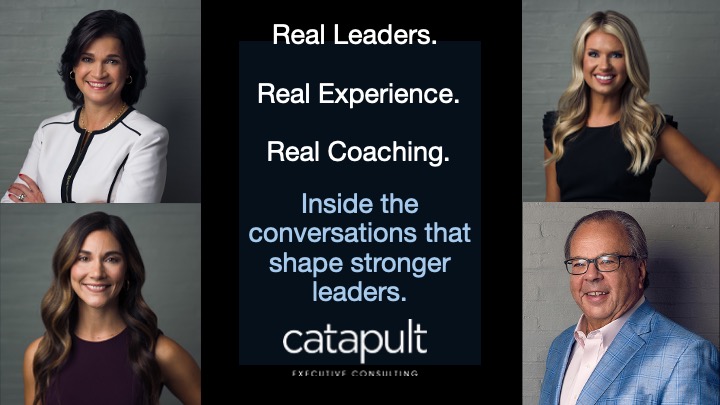
Leadership growth rarely happens by accident.
The higher leaders rise, the more complex the challenges become. Expectations increase. Decisions carry greater weight. The pressure to drive performance, lead people effectively, and navigate change can leave even the most accomplished leaders feeling isolated or stretched thin.
That’s where executive coaching can make a meaningful difference.
At Catapult, executive coaching is never one-size-fits-all. Each engagement is designed around the individual leader, their organization, and the outcomes they are striving to achieve. Through a combination of insight, challenge, reflection, and accountability, Catapult’s coaches help leaders unlock greater clarity, strengthen leadership effectiveness, and create lasting organizational impact.
What makes Catapult’s coaching approach especially powerful is the diversity of experience and perspective across the coaching team itself.
We sat down with Catapult’s executive coaches to discuss their philosophy, approach, and what they believe creates transformational leadership growth.
Marsha Koelmel, President
Before founding Catapult, Marsha spent more than two decades in executive leadership roles within the financial services industry. Having navigated growth, transformation, organizational complexity, and high-stakes decision making herself, she brings both practical business experience and deep insight into the human dynamics of leadership.
Her coaching approach sits at the intersection of organizational performance and personal effectiveness. She helps leaders strengthen self-awareness, navigate complexity, and lead with greater intention while staying focused on the business outcomes they are accountable for delivering.
Q: What makes executive coaching truly effective?
Marsha:
“Executive coaching is most effective when there is trust, candor, and a genuine willingness to grow. Senior leaders don’t need another advisor telling them what to do. They need a thought partner who can help them think more clearly, challenge assumptions, uncover blind spots, and see situations from new perspectives.
The most powerful coaching happens when we explore both the business challenge and the person leading through it. Strategy, decision making, relationships, influence, resilience, confidence, and leadership presence all shape outcomes.
I also believe coaching must create measurable impact. Organizations invest in coaching because they want leaders who can drive results, strengthen teams, and navigate increasingly complex environments. The work is deeply personal, but it should also translate into meaningful business outcomes.”
Q: How would you describe your coaching style?
Marsha:
“My coaching style is thoughtful, intellectually curious, and appropriately direct. I bring the perspective of someone who has sat in the executive seat and understands the realities of leading through uncertainty, change, growth, and competing stakeholder demands.
I create a space where leaders can slow down enough to think strategically, examine patterns that may be limiting their effectiveness, and make more intentional choices about how they lead. Clients often tell me that our conversations help them connect dots they hadn’t previously seen—about themselves, their teams, and their organizations.
My goal is not to provide answers. It is to help leaders develop the insight, judgment, and confidence to find their own best answers and lead more effectively as a result.”
Tasha LeFevre, Vice President of Development
Tasha specializes in leadership, talent, and organizational effectiveness, partnering with executive teams and boards to navigate growth, transformation, and leadership transition. Her work aligns strategy, leadership capability, and organizational culture to strengthen execution and support sustained organizational performance.
Q: What differentiates Catapult’s coaching approach?
Tasha:
“We believe leadership development should directly support organizational strategy. Coaching isn’t separate from the business—it’s a lever for performance, alignment, and growth.
Our coaching engagements are highly customized and grounded in real-world leadership challenges. We help leaders strengthen self-awareness, improve decision-making, and develop the mindset and behaviors needed to lead effectively in complex environments.”
Q: What themes are you seeing most often with leaders today?
Tasha:
“Many leaders are navigating constant change while also trying to maintain culture, engagement, and performance. I’m seeing a growing need for clarity, resilience, emotional intelligence, and the ability to lead through ambiguity.
The strongest leaders are willing to reflect, adapt, and continue evolving.”
Paige Gullotti Nero, Senior Director of Talent
Paige Gullotti Nero partners with leaders to strengthen self-awareness, leadership effectiveness, and career growth. With extensive experience in executive search, leadership assessment, and executive coaching, she brings a unique perspective that combines talent strategy with practical leadership development.
Leveraging industry-leading assessment tools, Paige helps leaders better understand their strengths, blind spots, motivations, and opportunities for growth. Her coaching approach is rooted in curiosity, trust, and accountability; creating a space where leaders can reflect, challenge assumptions, and translate insight into meaningful action.
Paige is passionate about helping leaders navigate complexity, build stronger relationships, and lead with greater confidence, authenticity, and impact.
Q: What do leaders often underestimate about coaching?
Paige:
“Many leaders initially think coaching is about receiving advice or finding quick answers. In reality, the most valuable coaching often comes from slowing down, creating space for reflection, and developing a deeper understanding of yourself and the challenges you’re facing.
Leaders are often moving so quickly that they don’t have time to process what is happening beneath the surface. Coaching creates that opportunity. Through thoughtful questions, honest dialogue, and increased self-awareness, leaders begin to recognize patterns, uncover blind spots, and gain clarity about how their behaviors impact others. Those insights often become the catalyst for meaningful growth and lasting change.”
Q: What is your philosophy when working with leaders?
Paige:
“My coaching philosophy is rooted in curiosity, partnership, and accountability. I believe every leader has the potential to grow and become more effective, but lasting development starts with self-awareness.
I take a discovery-based approach, helping leaders explore challenges from multiple perspectives rather than rushing to solutions. Through assessment insights, thoughtful questioning, and candid conversation, we work together to identify what’s driving results, what’s getting in the way, and what meaningful growth looks like.
My role isn’t to provide all the answers. It’s to create an environment where leaders can build confidence, strengthen their effectiveness, and develop practical strategies they can apply immediately in their roles. When leaders grow, the positive impact extends to their teams, their organizations, and the people they serve.”
John Koelmel, Senior Advisor
As a former CEO and accomplished business leader, John brings decades of executive experience leading organizations through growth, transformation, and strategic change. His coaching perspective is grounded in leadership accountability, organizational alignment, and long-term impact.
Q: What separates good leaders from truly exceptional leaders?
John:
“Exceptional leaders have a clear vision, the right people in the right seats on their team and the courage to lead decisively. They understand that leadership is about creating followership, enabling the success of others and creating meaningful impact.
Great leaders are intentional about organizational change and growth. Coaching challenges even the best thinking and enables more effective outcomes.”
Q: What value does coaching provide senior leaders?
John:
“The higher leaders rise, the fewer opportunities they have for candid feedback and honest reflection. Coaching creates space to take an honest look in the mirror, be vulnerable, test ideas, and sharpen leadership effectiveness in a very meaningful way.
The best leaders never stop learning, evolving, and challenging themselves – and setting the right example their team to do the same.”
One Team. Multiple Perspectives. Shared Commitment.
While each Catapult coach brings a distinct background, style, and perspective, they share a common philosophy: leadership growth is deeply personal, highly strategic, and transformative when approached intentionally.
Catapult’s executive coaching engagements are designed to help leaders:
- Strengthen leadership effectiveness
- Improve communication and influence
- Navigate transition and change
- Increase self-awareness and emotional intelligence
- Build stronger teams and organizational alignment
- Lead with greater confidence, clarity, and purpose
At its core, executive coaching is about helping leaders become more effective versions of themselves—for the benefit of both the individual and the organization.
Whether supporting emerging leaders, senior executives, or CEOs, Catapult’s coaching team is committed to helping leaders create lasting meaningful results.
Start a conversation with us today.
Return to all posts