Two Perspectives, One Leadership Truth: The Power of Values
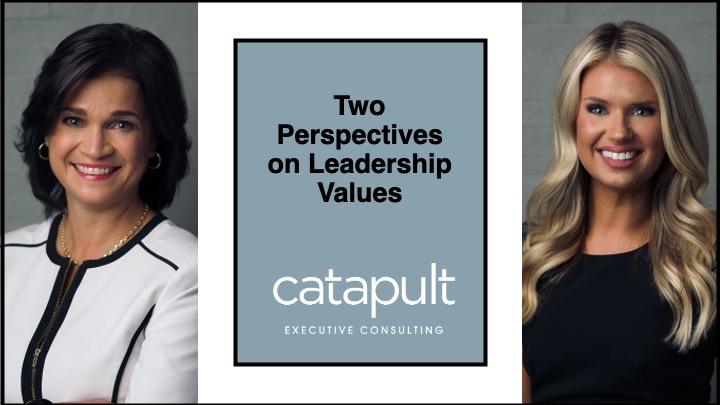
By Marsha Koelmel and Tasha LeFevre
Values are often written on walls, embedded in mission statements, and referenced in strategy sessions. But their true impact shows up in the decisions leaders make, the cultures organizations build, and the way teams navigate challenges. When values are aligned between leaders and organizations, they create clarity, trust, and momentum. When they are not, even the most capable leaders can struggle to succeed.
At Catapult, we see this dynamic from two important vantage points. From an executive search perspective, values alignment is essential when identifying leaders who will thrive within an organization’s culture. From a leadership development perspective, values shape how leaders grow, make decisions, and navigate moments when personal and organizational priorities may not fully align.
Both perspectives point to the same truth: values are not abstract ideals—they are operational drivers of leadership effectiveness.
HIRING FOR ALIGNMENT: WHY VALUES MATTER IN EXECUTIVE SELECTION
When organizations begin an executive search, they often start with the visible requirements: experience, industry knowledge, and leadership competencies. These are essential—but they are not enough.
The most successful executive placements occur when there is alignment between who the leader is and how the organization operates.
Culture and values shape every leadership decision—from how conflict is handled to how risk is approached. A leader whose personal motivations and values diverge from the organization’s culture may initially appear successful, but over time the misalignment becomes difficult to ignore.
That is why understanding a candidate’s deeper drivers is a critical component of our executive search process.
Looking Beyond the Resume
At Catapult, we integrate structured interviews, stakeholder insights, and psychometric assessments to gain a more complete picture of each candidate.
Two tools we frequently use are the Hogan Leadership Forecast Suite and the EQ-i emotional intelligence assessment. These assessments provide meaningful insight into areas such as:
- Core motivations and values
- Leadership style and behavioral tendencies
- Emotional intelligence and interpersonal awareness
- Potential leadership risks under pressure
For example, the Motives, Values, Preferences Inventory (MVPI) within the Hogan suite helps reveal what truly energizes a leader—whether that’s recognition, collaboration, power, security, or innovation. Understanding these drivers helps us evaluate how well a candidate’s motivations align with the culture and strategic direction of the organization.
These insights allow us to move beyond intuition alone and bring a data-informed perspective into the selection process.
Fit Is Not About Similarity
One important clarification: values alignment does not mean hiring leaders who are identical to the existing team.
In fact, the best leadership teams often include diverse perspectives and leadership styles. What matters is that the leader’s core motivations and principles support the organization’s purpose and culture, even if their style introduces healthy challenge.
When values align, leaders can push organizations forward without creating unnecessary cultural friction.
WHEN VALUES ARE TESTED: THE LEADERSHIP DEVELOPMENT PERSPECTIVE
While executive search focuses on selecting leaders who align with the organization’s values, leadership development often addresses what happens after a leader is already inside the organization.
One of the most complex situations we encounter in coaching and development work occurs when a leader’s personal values begin to clash with the organization’s culture or priorities.
These situations are rarely black and white. Leaders may find themselves wrestling with questions such as:
- Does the way decisions are made here align with my leadership philosophy?
- How do I stay authentic while adapting to this organization’s expectations?
- When does compromise become misalignment?
Navigating these questions requires reflection, courage, and thoughtful leadership.
Clarity Begins with Self-Reflection
Before leaders can determine whether values are aligned—or misaligned—they must first have clarity about their own principles and leadership philosophy.
Strong leaders regularly pause to ask themselves important questions:
- What principles guide my decisions as a leader?
- What behaviors do I expect from the teams I lead?
- Where am I willing to adapt—and where do I draw the line?
Leaders who take time to reflect on these questions develop a stronger sense of alignment between their personal values and their leadership approach. That clarity allows them to navigate complex organizational dynamics with greater confidence and integrity.
Navigating Values Tension
When values tensions arise, leaders generally face three potential paths:
Adapt and grow.
Sometimes tension reflects an opportunity for growth. Exposure to different perspectives or organizational realities can expand a leader’s thinking and leadership approach.
Influence the culture.
Leaders have the ability to shape culture. By modeling behaviors aligned with their own values—such as transparency, accountability, or collaboration—they can positively influence the broader organization.
Reassess the fit.
In some cases, the misalignment may be more fundamental. When core values diverge significantly, leaders may need to consider whether the organization is the right long-term environment for them to thrive.
Leadership development is not about forcing alignment—it is about helping leaders navigate these realities with clarity, authenticity, and purpose.
Where Values and Leadership Meet
Marsha and Tasha’s perspectives illustrate two sides of the same leadership equation: identifying leaders who fit the organization’s culture and helping those leaders navigate their own values once they are in place. Ultimately, values alignment is not a one-time consideration—it is an ongoing leadership imperative. From selecting the right executive leaders to supporting their continued growth, organizations that take values seriously create stronger cultures, clearer decision-making, and more resilient leadership teams.
At Catapult, we see every day how intentional attention to values—through executive search, leadership development, and coaching—can strengthen organizations and the leaders who guide them. When values are clearly understood and actively lived, they become more than words—they become a powerful force shaping how organizations move forward.
Return to all posts